

Which Board Is Best in India: CBSE, ICSE or Cambridge?
January 30, 2026 2026-02-02 16:07Which Board Is Best in India: CBSE, ICSE or Cambridge?

Which Board Is Best in India: CBSE, ICSE or Cambridge?
 Admin
Admin If you are a parent in Mumbai today, choosing the right school board is no longer just about textbooks and exams. It is about your child’s confidence, global exposure, skills, and future career options. One of the most common questions parents search online is: which board is best CBSE, ICSE or Cambridge (IGCSE) in India for future career?
The truth is — each board has strengths. But depending on your child’s learning style and long-term goals, one may be more suitable than the others.
Let’s break this down in a simple, practical, parent-friendly way.
Understanding CBSE, ICSE and Cambridge — In Simple Terms
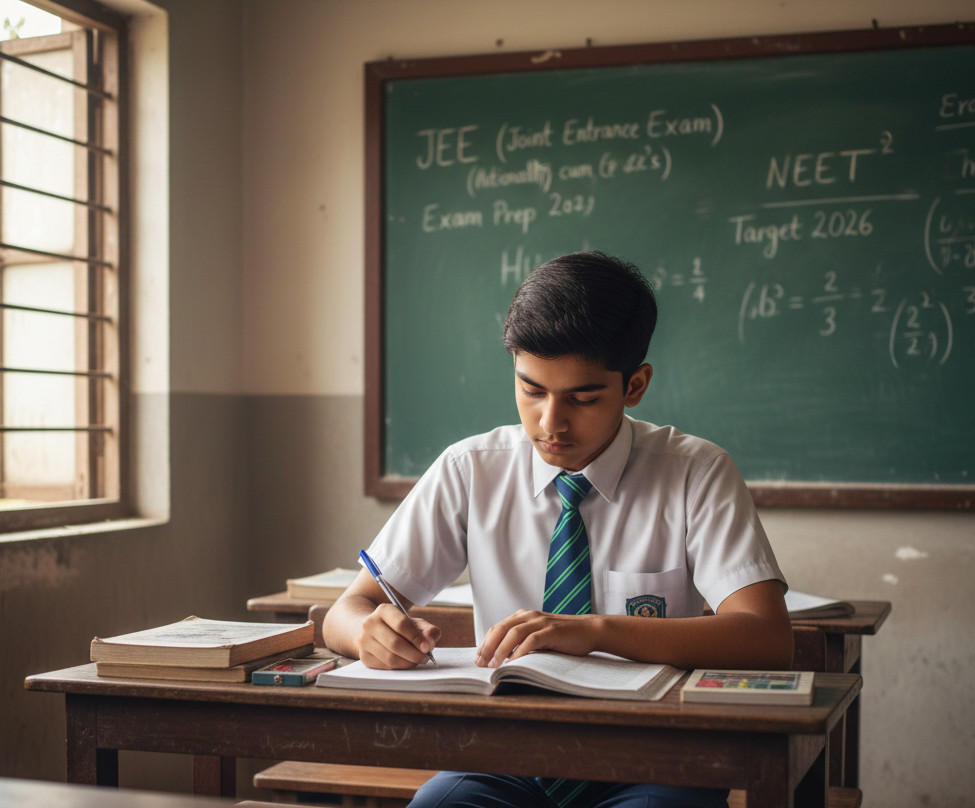
Central Board of Secondary Section (CBSE) is widely recognised across India and is structured, syllabus-driven and exam-focused. It works well for students preparing for Indian competitive exams like JEE and NEET.
Best suited for:
Families relocating frequently within India
Students targeting Indian entrance exams
Students who prefer structured textbook learning or rote learning
ICSE (Indian Certificate of Secondary Education)
ICSE focuses strongly on language skills, detailed subject knowledge and project work. It is academically rigorous and detail-oriented.
Best suited for:
Students strong in language and theory subjects
Parents looking for strong academic depth
- Good for English literature study
- Students who prefer structured textbook learning
- Can be considered for Indian entrance exam preparations

Cambridge focuses on conceptual clarity, application, real-world skills and global exposure. It is often searched by parents asking: is Cambridge board good for Indian students planning to study abroad?

Best suited for:
Students who learn by understanding, not memorising
Families planning global education pathways
Students who thrive in research, projects and skill-based learning
CBSE vs ICSE vs Cambridge Curriculum Difference — Parent Guide
When parents search CBSE vs ICSE vs Cambridge curriculum difference India parents guide, they are usually trying to understand teaching style and learning outcomes.
| Factor | CBSE | ICSE | Cambridge |
|---|---|---|---|
| Teaching Style | Structured syllabus | Detailed theoretical | Concept + application based |
| Exams | Final exam focused | Theory + internal | Coursework + exams balance |
| Subject Flexibility | Limited | Moderate | Very High |
| Global Recognition | Moderate | Moderate | Very High |
Cambridge stands out when parents look for which board prepares child for global future and universities, because it is designed for international academic mobility and skill development.
Cambridge vs CBSE — Which Is Better for Practical Learning and Skills?
Here is the main difference:
CBSE → Knowledge based
Cambridge → Knowledge + Application + Analysis
Cambridge classrooms typically include:
Research projects
Presentations
Real-world problem solving
Independent thinking
This directly supports 21st-century skills like communication, leadership and innovation.
Which Board Is Less Stressful for Children?
Another real parent concern is: which board is less stressful for child CBSE ICSE or Cambridge
While stress depends on school implementation, Cambridge offers:
Flexible subject combinations
Continuous assessment instead of only final exams
Personalised learning pace
This often makes learning feel more meaningful rather than exam-pressured.
Which Board Gives More Subject Choices After Grade 8 in India?
Parents planning long term often looks for boards that gives more subject choices after grade 8 India
Cambridge offers wider subject flexibility including:
Business Studies
Global Perspectives
Psychology
Environmental Management
Media Studies
This helps children discover strengths early instead of being locked into rigid streams.
What Mumbai Parents Should Actually Consider?
Parents search best international curriculum schools in Mumbai for holistic development, they are usually thinking about:
✔ Confidence building
✔ Communication skills
✔ Global exposure
✔ University readiness
✔ Emotional intelligence
Today’s world is global. Careers are global. Skills must be global too.
School Admission Age Criteria in Maharashtra (Important for Parents)
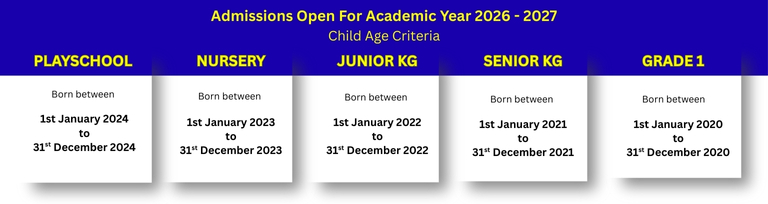
For parents planning admissions, understanding school admission age criteria Maharashtra nursery Jr KG Sr KG 2026 is very important.
As per Maharashtra education guidelines aligned with NEP structure, the general age expectations are:
Nursery: 3 years completed
Jr KG: 4 years completed
Sr KG: 5 years completed
Grade 1: 6 years completed
However, the exact cut-off dates and documentation requirements may vary slightly based on academic year notifications.
Parents can check detailed updated guidelines and practical Mumbai admission explanations here:
👉 https://panbaiinternationalschool.com/2025/09/27/age-criterion-for-school-admissions-in-mumbai-2026-2027/
This is especially helpful for parents searching minimum age for nursery admission Mumbai government rules NEP, because it explains real admission scenarios, not just policy text.
So, Which Board Is Best in India?
The honest answer is — it depends on your child and your goals.
Choose CBSE if:
You want strong alignment with Indian competitive exams
You want consistency across India
Choose ICSE if:
You want academic depth and strong language foundation
Choose Cambridge if:
You want global exposure
You want skill-based learning
You want subject flexibility
You want preparation for international universities
The Future of Education Is Changing
The world is changing rapidly. Careers are no longer limited to one country or one skill. Parents today are not just asking which board is easiest — they are asking:
Which board prepares my child for real life?
Which board builds confidence and thinking skills?
Which board helps my child succeed globally?
- Which board is well suited to prepare my child for the ever changing technology?
And that is why more parents in Mumbai are exploring international curricula.
Final Thought for Parents
Your child will spend 14–15 years in school. The board you choose shapes:
How they think
How they solve problems
How confident they feel
How ready they are for the future
The best board is the one that matches your child’s learning style and your family’s future vision.

FAQs: Which Board Is Best in India – CBSE, ICSE or Cambridge?
There is no one-size-fits-all answer, but the choice depends on how your child learns and what future you envision.
CBSE works well for exam-centric learning within India. ICSE focuses on academic depth and language skills. Cambridge stands out for parents looking for conceptual learning, global exposure, flexibility, and skill development—qualities increasingly important in today’s world.
The real difference is not the syllabus, but the learning approach.
CBSE and ICSE focus more on content coverage and exams. Cambridge focuses on how students think, analyse, apply concepts, and communicate ideas. This shift from memorisation to understanding often makes learning more meaningful and future-ready.
Cambridge places the strongest emphasis on analytical, critical and independent thinking.
Students are encouraged to:
Ask “why” and “how”
Solve real-world problems
Explain reasoning, not just answers
Indian boards do develop analytical skills, but largely in higher grades, while Cambridge builds these skills from early years.
4. Is Cambridge board better than CBSE or ICSE for future career opportunities?
Many parents find Cambridge to be less stressful for children.
Cambridge uses:
Continuous assessments
Projects and coursework
Balanced exams
This reduces pressure on one final exam and supports consistent learning. Indian boards rely more heavily on year-end exams, which can feel stressful for some children.
Cambridge is globally designed but highly adaptable to Indian students. Indian learners often thrive because the curriculum:
Respects different learning speeds
Encourages confidence and expression
Builds strong conceptual foundations
It is not about being “foreign”—it is about being future-ready.
Cambridge clearly offers stronger global exposure.
Students engage with:
International perspectives
Global case studies
World-recognised qualifications
This prepares them to collaborate, study or work across borders, while still remaining grounded in strong academics.
For preschool and early years, Cambridge-aligned schools often focus more on:
Play-based learning
Social and emotional development
Language and communication skills
Curiosity and exploration
Indian boards often introduce formal academics earlier, while Cambridge focuses on learning readiness rather than early pressure.
Cambridge offers significantly more subject flexibility.
Students can choose subjects based on interests and strengths rather than fixed streams. This helps children discover what they truly enjoy and are good at—an important advantage in higher education and career planning.
Yes.
Cambridge qualifications are recognised by Indian universities and institutions, as well as universities worldwide. Students can pursue higher education in India or abroad with equal confidence.
Cambridge strongly emphasises:
Speaking
Presentations
Discussions
Structured writing
This builds confidence and articulation from a young age. Indian boards focus more on written examinations, while Cambridge balances both spoken and written expression.
This decision impacts more than just academics.
When you choose an international board, your child learns alongside:
Peers from globally aware families
Parents who value mindset, exposure and skills
Students encouraged to question, collaborate and think independently
Over time, this environment shapes:
Your child’s thinking patterns
Confidence and curiosity
Global mindset
Approach to learning and life
Children are influenced by the learning culture and peer environment, not just textbooks. This often creates more open-minded, confident and future-ready learners.
Search
Popular posts
- Best International School in Mumbai – Why Panbai International School Leads
- Which Board Is Best in India: CBSE, ICSE or Cambridge?
- Age Criteria for School Admissions in Mumbai 2026 – 2027
- What is Feynman Technique?
- What is Active Recall and How it helps ?
- What is Pomodoro Study Technique and How Does it work?
- 19 Different Study Techniques and How they work
