
Best Schools for Expat Families in Mumbai: A Relocation Guide for 2026
July 11, 2026 2026-07-11 13:56Best Schools for Expat Families in Mumbai: A Relocation Guide for 2026
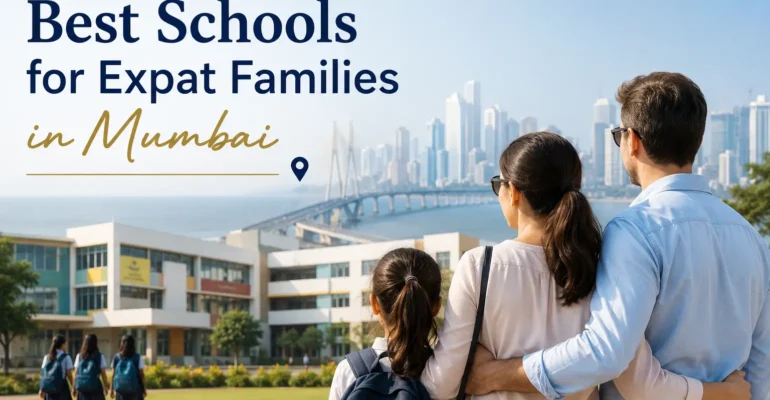
Best Schools for Expat Families in Mumbai: A Relocation Guide for 2026
 Admin
Admin For most expat families relocating to Mumbai, choosing a school is not just the first decision — it is the decision that determines everything else. Which neighbourhood you live in. How long your child spends commuting each day. Which social circles your family ends up in. Whether your child’s academic progress continues uninterrupted, or whether a curriculum mismatch turns the first year in a new city into an unnecessarily difficult one.
Mumbai is one of Asia’s most dynamic expat destinations. Its concentration of multinational corporations — across Bandra Kurla Complex, Nariman Point, Lower Parel, and Powai — means the city consistently attracts senior professionals from across the globe. And with that, a sustained, high demand for quality international schooling that very few other Indian cities can match.
This guide is written specifically for families arriving in Mumbai in 2026, whether as first-time expats, returning NRIs, or corporate transferees. It covers curricula, neighbourhoods, realistic fee ranges, admission timelines, and the questions that actually matter when choosing a school — not just a list of names with logos.
Why School Choice Shapes Your Entire Mumbai Experience
Before getting into specific schools, it is worth understanding why this decision carries more weight in Mumbai than in most cities.
Mumbai’s geography works against you if you get the school location wrong. The city runs roughly north to south across a narrow peninsula, and traffic during school hours can turn a 12-kilometre commute into a 90-minute ordeal. Families who choose a school in South Mumbai when they live in Andheri — or vice versa — frequently find that the commute alone becomes the defining feature of their child’s daily experience in the city.
The practical rule that experienced expat parents consistently give: choose your neighbourhood based on the school, not the other way around. Mumbai’s two broad clusters of international schools are South Mumbai (Colaba, Cuffe Parade, Fort, Lower Parel, Tardeo) and the western suburbs (Santacruz, Bandra, Juhu, Andheri, Goregaon, Powai). Picking a home that puts your child within a 30-minute commute window during peak hours is worth more than an extra bedroom in most cases.
Understanding the Curriculum Landscape: What Expat Families Need to Know
Mumbai’s international schools offer four main curriculum frameworks. Understanding the differences is essential before you shortlist schools, because the right choice depends almost entirely on where your child has been studying and where they are likely to go next.
Cambridge IGCSE and A Levels (CAIE)
The Cambridge curriculum — offered by Cambridge Assessment International Education (CAIE) — is the most globally portable curriculum available in Mumbai. Recognised by over 2,000 universities across 160 countries, it is the natural choice for families who have been in the British, Singapore, Malaysian, Middle Eastern, or African school systems, where Cambridge is the standard framework.
For expat families, Cambridge’s portability is its most important feature. A child who has been studying at a Cambridge school in Singapore, Dubai, or the UK can transition to a CAIE-affiliated school in Mumbai without curriculum disruption — the syllabus, the assessment style, and the grading framework are the same. This is the primary reason many expat families specifically seek out Cambridge-affiliated schools in Mumbai when relocating, particularly for children in the IGCSE years (Grades 9-10) or A Levels (Grades 11-12), where curriculum continuity is most critical.
International Baccalaureate (IB)
The IB Diploma Programme is widely recognised globally and is particularly popular among American and European expat families. However, the IB is more of a standalone qualification than a continuous global curriculum — the full IB continuum (PYP, MYP, DP) requires a school to offer all three phases, which not all Mumbai IB schools do. For families who have been in the American or European system and are transitioning at the Diploma level (Grade 11-12), the IB DP is a well-supported option in Mumbai.
American Curriculum
The American School of Bombay (ASB) in Bandra East is the primary option for families coming from the US curriculum system. It offers the IB alongside an American curriculum framework and has a genuinely international student body with over 40 nationalities. Fees are at the premium end of the Mumbai spectrum.
ICSE / Indian Boards
Some expat families — particularly returning NRIs who plan to stay in India long-term — consider ICSE schools like Bombay Scottish or Cathedral and John Connon. These are prestigious, well-established institutions with strong academic reputations, but they are national-board schools, not internationally portable curricula. For families who expect to relocate again within a few years, these are rarely the right fit.
The Best Schools for Expat Families in Mumbai: An Area-by-Area Guide
Rather than a generic ranked list, what actually helps expat families is understanding which schools are in which part of the city — and what each offers specifically for children arriving from abroad.
Western Suburbs (Santacruz, Bandra, Juhu, Andheri, Vile Parle)
This corridor is where the majority of Mumbai’s working expat population lives, given its proximity to BKC (one of the city’s primary commercial hubs), the international airport, and a well-developed residential and social infrastructure. International schools in this corridor tend to offer the Cambridge curriculum, making it the most natural landing zone for expat families arriving from Cambridge-system countries.
Panbai International School, Santacruz East
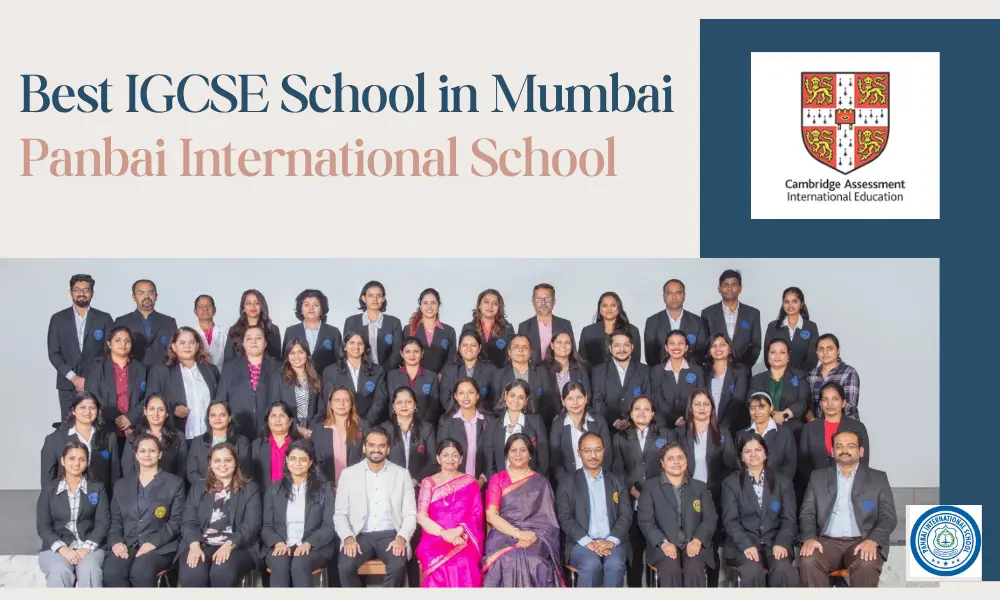
For expat families settling in the western suburbs, Panbai International School is one of the most practical and academically credible choices for a Cambridge school in Mumbai. It is a CAIE-affiliated internationally recognised school in Mumbai offering the complete Cambridge pathway — from Cambridge Early Years through Primary, Lower Secondary, IGCSE, and A Levels — all under one roof.
This matters enormously for expat families. A child who arrives in Mumbai having completed Cambridge Primary in Singapore, or having done two years of IGCSE in Dubai, can join Panbai at the corresponding level without any curriculum adjustment. The syllabus, the assessment approach, and the skill framework are identical — only the faces are new.
Panbai is located in Santacruz East, accessible from Bandra, BKC, Juhu, Andheri, Vile Parle, Dadar, Mahim, and Kalina. For families based in the western suburbs — which covers most of Mumbai’s expat population — the commute is manageable in a way that South Mumbai schools simply are not. The school maintains a 15:1 student-to-teacher ratio, offers structured English Language Support for students transitioning from non-English-medium environments, and has a verified track record of placing graduates at universities in the UK, US, Canada, and India. Alumni have been admitted to Boston University, Nottingham Trent University, California State University, IIT Dharwad, NMIMS Mumbai, and VIT.
For A Level students in particular, Panbai’s full pathway is a meaningful differentiator — students do not need to change schools after IGCSE, which removes one of the most disruptive transitions a teenager can face during an already unsettled period of living in a new country.
Dhirubhai Ambani International School (DAIS), Bandra Kurla Complex
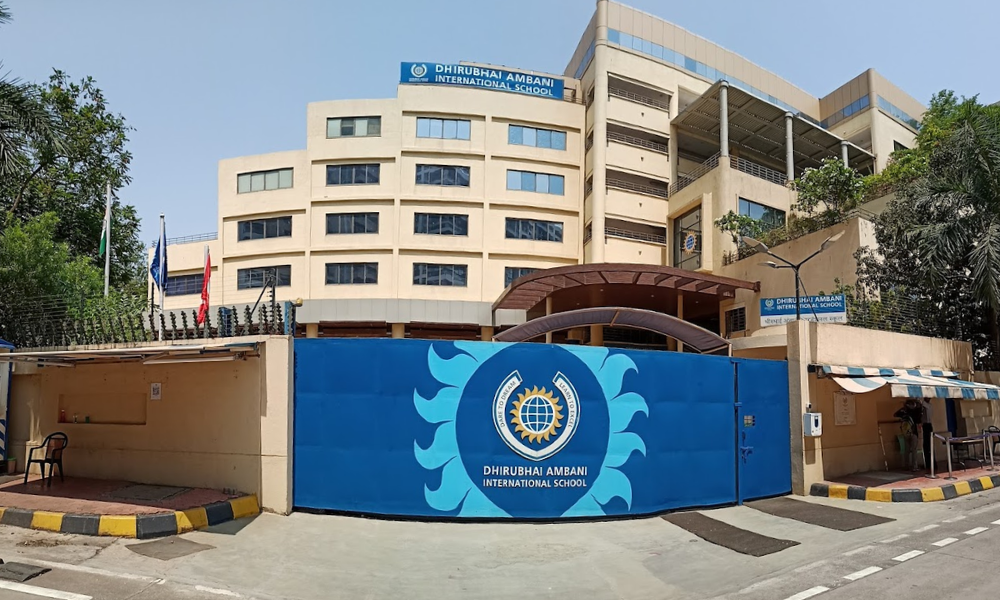
DAIS sits within BKC itself and offers ICSE, Cambridge IGCSE, and the IB Diploma Programme. It is consistently ranked among India’s top international schools and has a genuinely multicultural student body. For families whose children are at the IGCSE or IB Diploma level and whose companies are headquartered in or near BKC, DAIS’s location is a genuine convenience. Fees are at the premium end of the Mumbai market, and admission is competitive with limited seats.
South Mumbai (Colaba, Cuffe Parade, Lower Parel, Tardeo, Worli)
South Mumbai’s international schools serve a different kind of expat profile — families in banking and financial services, legal firms, and older multinational headquarters concentrated around Nariman Point and Lower Parel. The schools here are prestigious but the commute from western suburbs residential areas can be prohibitive during school hours.
B.D. Somani International School, Cuffe Parade
One of South Mumbai’s most well-regarded international schools, B.D. Somani offers the IB and Cambridge IGCSE and has a strong multicultural environment. Its location in Cuffe Parade suits families living in South Mumbai — particularly Colaba, Worli, and Prabhadevi — but is impractical for families based in the western suburbs.
Aditya Birla World Academy, Tardeo
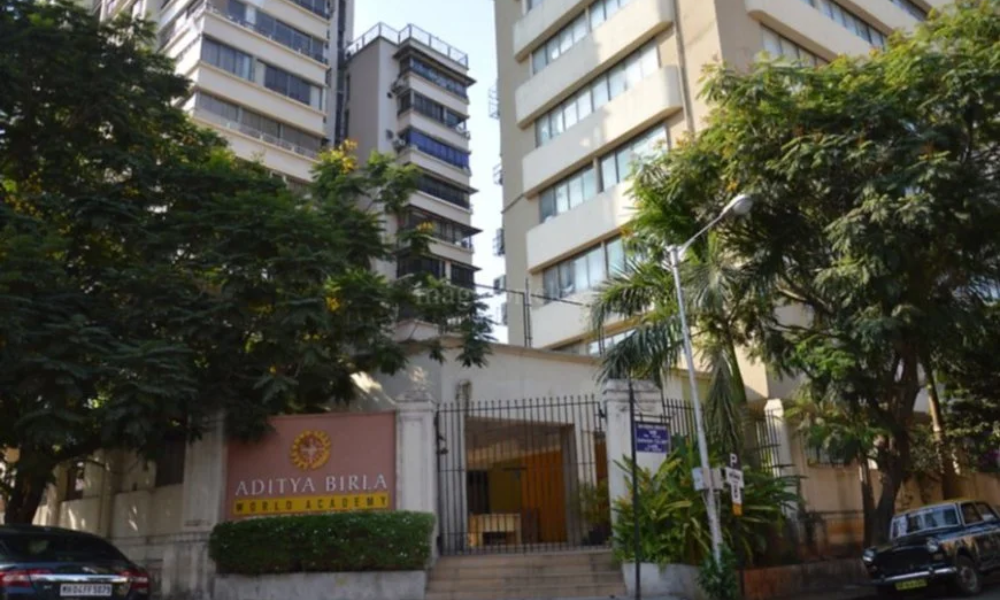
ABWA offers both Cambridge and IB curricula, which gives it unusual flexibility for expat families arriving from either system. The school is known for strong career counselling and consistent university placement outcomes. Located in Tardeo, it is accessible from central and south Mumbai residential areas.
The Cathedral and John Connon School, Fort
A heritage institution with a strong academic reputation, Cathedral offers IB alongside CAIE and IGCSE. It is one of the few schools in Mumbai that genuinely blends the prestige of an established Indian institution with an internationally recognised curriculum. Admission is highly competitive.
Goregaon and Powai
Oberoi International School (OIS), Goregaon East
OIS offers the full IB continuum — PYP, MYP, and Diploma — and is ranked among the top IB schools in India. It serves families in the western and central suburbs and is particularly well-suited for families coming from IB schools internationally. The campus is located inside the Oberoi Garden City complex, which provides an unusually self-contained and high-quality environment. Commutes from Bandra or Juhu are manageable during non-peak hours, though school-time traffic requires factoring in.
Fees at International Schools in Mumbai: What Expat Families Should Budget
Fees vary significantly by school, curriculum, and grade. The figures below are realistic working ranges for 2026 — always request the total cost of attendance (including one-time fees, exam fees, transport, and devices) before comparing:
| Level | Cambridge Schools (annual) | IB Schools (annual) |
|---|---|---|
| Preschool / Early Years | ₹1,50,000 – ₹4,00,000 | ₹4,00,000 – ₹9,00,000 |
| Primary (Grades 1–5) | ₹2,50,000 – ₹6,00,000 | ₹7,50,000 – ₹14,00,000 |
| Secondary / IGCSE (Grades 6–10) | ₹3,50,000 – ₹7,00,000 | ₹12,00,000 – ₹18,00,000 |
| A Levels / IB Diploma (Grades 11–12) | ₹4,00,000 – ₹8,00,000 | ₹16,00,000 – ₹22,00,000 |
Additional costs to factor in:
- One-time admission fee: ₹25,000 to ₹1,00,000 (non-refundable at most schools)
- Refundable security deposit: varies by school
- Cambridge board examination fees: ₹80,000 to ₹1,20,000 per exam session (IGCSE and A Levels)
- School transport (AC bus with GPS): ₹30,000 to ₹60,000 per year
- Devices (tablets or laptops required from Grade 6-7 at most international schools): ₹40,000 to ₹80,000 one-time
Cambridge IGCSE schools in Mumbai are meaningfully more affordable than IB schools at every level, while offering equivalent global portability for most university destinations. For expat families on corporate relocation packages that include school fees, the difference may be immaterial — but for families self-funding, the Cambridge route offers substantially better value for a globally recognised outcome.
Admission Process for Expat Families: What Is Different
International school admissions in Mumbai work on the school’s own timeline, not a government-mandated one. For expat families, a few specific points are worth knowing:
Start Earlier Than You Think
The best-known international schools in Mumbai have limited seats and maintain waiting lists for popular grade levels. Families arriving for a June academic year start should begin the enquiry process no later than November of the preceding year — ideally September or October. For mid-year arrivals (common with corporate relocations), contact schools directly rather than through the standard online form.
Documents Required for Foreign Nationals
In addition to standard admission documents, foreign nationals relocating to Mumbai will need:
- Passport copies of parents and child
- Visa documentation — employment visa for the parent, dependent visa for the child
- Previous school records and transcripts (in English or with certified translation)
- Transfer Certificate from previous school (required by most schools; may need to be apostilled if from abroad)
- FRRO registration (Foreign Regional Registration Office) — required within 14 days of arrival in India for most foreign nationals, and some schools ask for this as part of the admission process
Mid-Year Admissions
Corporate relocations rarely coincide with academic year starts. Most established international schools in Mumbai do handle mid-year admissions on a case-by-case basis, and expat families with documented corporate relocation are often given priority consideration given the circumstances. At Panbai International School, mid-year admission enquiries can be directed to admissions@panbaiinternationalschool.com or +91 7700096669.
Curriculum Assessment
Schools typically conduct an age-appropriate assessment to determine the right grade placement — particularly important for expat children whose year group labelling may differ from the Indian system (Year 7 in the UK = Grade 6 in India, for example). Clarify the grade equivalency question directly with the admissions counsellor before the assessment.
What Expat Families Should Specifically Ask Before Choosing a School
Most school visits give you the curated version. Here are the questions that get you the real information:
On curriculum continuity:
- If my child has been studying in a Cambridge / IB / American school, at exactly which grade level can they join and what assessment will determine this?
- Does the school offer the full pathway from the current grade through to Grade 12, or will my child need to change schools?
On English Language Support:
- What provision does the school have for students whose English language skills are still developing?
- Is EAL (English as an Additional Language) support available, and is it included in the fees or charged separately?
On community and social integration:
- What proportion of the student body is international or from expat families?
- Is there a parent community or network for expat families that helps with settling in?
On university destinations:
- Can you share the university destination list for the last three cohorts, broken down by country?
- What percentage of students go to UK, US, or other international universities versus Indian universities?
On the practical realities:
- What is the realistic commute time from [your area] during school hours, not off-peak?
- What is the total cost of attendance including transport, exam fees, and devices for my child’s grade?
How Panbai International School Supports Expat Families Specifically
For expat families settling in Mumbai’s western suburbs, Panbai International School in Santacruz East addresses the specific challenges of international relocation in ways that generic school marketing rarely captures.
Curriculum continuity: The complete Cambridge pathway from Early Years through A Levels means a child arriving from any Cambridge-affiliated school globally — whether in Singapore, UAE, UK, or elsewhere — can join at the appropriate level without curriculum disruption. The benefits of this continuous international schooling approach are particularly significant for children who have already moved countries once or twice and need academic stability.
Personalised attention: A 15:1 student-to-teacher ratio means a newly arrived child does not disappear into a large class during an already unsettled transition period. Teachers at Panbai can genuinely track how a new student is settling in academically and socially, and respond before small gaps become larger problems.
Multicultural learning environment: Panbai’s student community includes children from diverse national and cultural backgrounds, which matters for expat children who need to build friendships in a new environment quickly. The advantages of studying in this kind of international school setting extend well beyond academics — they shape a child’s confidence and social intelligence in ways that are particularly valuable during a relocation.
Location: Santacruz East is centrally positioned within Mumbai’s western suburbs corridor. For families whose primary working location is BKC, the airport area, Andheri MIDC, or anywhere along the western line, the school is genuinely accessible — not just “accessible” in the brochure sense.
To begin the admission enquiry process for 2026-27, families can reach Panbai’s admissions team at admissions@panbaiinternationalschool.com or +91 7700096669, or submit the online enquiry form at panbaiinternationalschool.com/admissions-open/.
Frequently Asked Questions
What is the best school for expat families in Mumbai?
The best school for an expat family in Mumbai depends primarily on two factors: which curriculum your child has been following, and where in the city you will be living. For families from the Cambridge system (UK, Singapore, UAE, Malaysia, Africa), a CAIE-affiliated school like Panbai International School in Santacruz East offers full curriculum continuity and is well-positioned for the western suburbs. For American curriculum families, the American School of Bombay in Bandra East is the standard choice. For IB families, Oberoi International School in Goregaon and B.D. Somani in Cuffe Parade are well-regarded options.
Which area of Mumbai is best for expat families with school-age children?
The western suburbs corridor — Santacruz, Bandra, Juhu, Andheri, Vile Parle — is where most of Mumbai’s working expat community is based, given its proximity to BKC, the airport, and a strong residential and social infrastructure. This area also has the highest concentration of Cambridge international schools. South Mumbai is prestigious but the school commute from western suburbs can be 60 to 90 minutes each way during peak hours.
Can my child join a Mumbai international school mid-year?
Yes. Most established international schools in Mumbai handle mid-year admissions for expat families on a case-by-case basis, particularly when the relocation is corporate and documented. Seats are not guaranteed, as popular grade levels may already be full, but established schools do accommodate mid-year joiners when possible. Contact the school directly by phone or email rather than through the standard online form for a faster response.
What documents does a foreign national need for school admission in Mumbai?
In addition to standard documents (birth certificate, previous school records, Transfer Certificate), foreign nationals need passport copies for parent and child, employment visa documentation, dependent visa for the child, and FRRO registration confirmation. Transfer Certificates from schools abroad may need to be apostilled. Some schools also ask for a proof of address in Mumbai, which can be provided via a rental agreement or company-provided accommodation letter.
Is the Cambridge curriculum from my child’s previous school recognised at Mumbai international schools?
Yes. Cambridge IGCSE and A Levels are administered globally by Cambridge Assessment International Education (CAIE) under a unified syllabus and assessment framework. A child who has been studying at a Cambridge-affiliated school in Singapore, the UAE, the UK, or anywhere else in the world will find the curriculum, assessment style, and grading framework identical at a CAIE-affiliated school in Mumbai. The transition is a change of school, not a change of educational system.
How long does school admission take for expat families in Mumbai?
From the initial enquiry to an admission decision, the process typically takes 3 to 8 weeks for standard admissions and may be faster for expat families with corporate relocation documentation. Once an offer is made, most schools require fee payment and confirmation within 7 days. For mid-year admissions, the timeline can sometimes be compressed if seats are available and documentation is ready.
Are school fees in Mumbai covered by corporate relocation packages?
Many multinational companies operating in Mumbai include education allowances as part of the expat compensation package, particularly for senior hires. The extent of coverage varies by company policy and contract — some cover full tuition, others provide a capped allowance. If your company covers school fees, clarify whether Cambridge IGCSE schools or only IB schools are covered under the policy, as this can meaningfully affect which schools are financially accessible to you.
What is the difference between Cambridge IGCSE and IB for expat children in Mumbai?
Both the Cambridge IGCSE / A Level pathway and the IB Diploma Programme are globally recognised and lead to strong university outcomes. The key differences for expat families: Cambridge is more widely offered in Mumbai (and globally), making it more portable across future moves; IB tends to be better suited for families from American or Northern European school systems; Cambridge A Levels offer greater subject specialisation (typically 3-4 subjects at depth), while IB DP requires 6 subjects across prescribed groups. For children already mid-way through one system, continuity almost always outweighs switching to the other.