


First Day of School Anxiety: How to Help Your Child (and Yourself) Cope
October 14, 2026 2026-10-13 15:24First Day of School Anxiety: How to Help Your Child (and Yourself) Cope
First Day of School Anxiety: How to Help Your Child (and Yourself) Cope
 Admin
Admin The new uniform is ironed, the water bottle is labelled and the school bag is packed. Then, the night before, your child quietly asks, “What if nobody plays with me?” Or perhaps the tears start at the school gate. Either way, your heart sinks a little.
If this sounds familiar, you are not alone. First day of school anxiety is one of the most common experiences in childhood, and one of the most manageable. This guide explains why it happens and what helps, both for your child and for you.
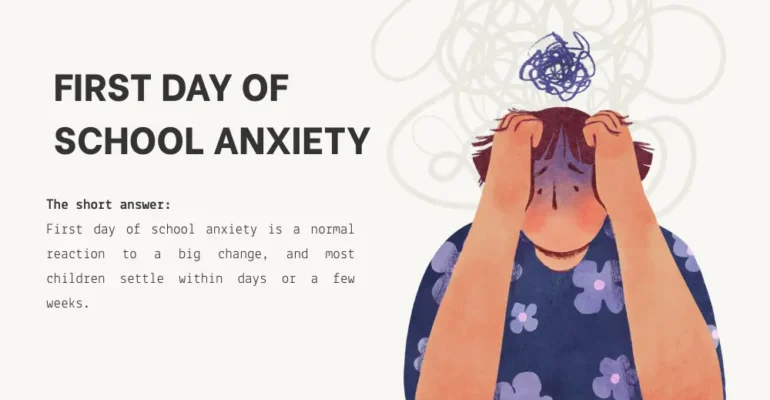
The short answer: First day of school anxiety is a normal reaction to a big change: a new building, new adults, new children and a new routine. Most children settle within days or a few weeks. You can help by preparing them gently in advance, keeping goodbyes short and predictable, naming their feelings without amplifying them and staying calm yourself, because children pick up on adult worry. Visit the school beforehand if you can, practise the new routine and talk about the fun parts of the day. Persistent distress that stops a child from attending, disturbs sleep for weeks or comes with frequent stomach-aches is a reason to speak to the teacher and your paediatrician.
Below, we cover how to prepare your child for a new school, how to handle the goodbye, tips by age, what to say, how to manage your own nerves and when to seek extra help.
Is First Day of School Anxiety Normal?
Yes. Feeling nervous about something new is a healthy, protective response. For very young children, it is also part of normal development. According to MedlinePlus from the US National Library of Medicine, separation anxiety is a typical stage that appears in infancy and usually eases by around age two, once children understand that a parent who leaves will come back. It can briefly return during stressful periods, and starting school is exactly that kind of period.
For older children, first day of school anxiety usually looks less like clinging and more like worrying: about making friends, finding the toilets, getting lost or not understanding the teacher. These are reasonable worries, and most fade once the unknown becomes familiar.
Why Children Feel Nervous About a New School
Understanding what drives first day of school anxiety helps you respond with patience rather than frustration. Common triggers include:
- The unknown. New spaces, faces and rules are a lot to take in at once.
- Separation. Younger children may not yet trust that you will come back.
- Social worries. Will anyone be my friend? Where will I sit at lunch?
- Change of routine. Earlier mornings, a school bus, a new tiffin time.
- Picking up on adult stress. Children notice when parents are anxious, even when nothing is said.
New school nerves are not a sign that you chose the wrong school or that your child is “too sensitive.” They are simply a response to change.
How to Prepare Your Child for a New School
The best way to ease first day of school anxiety is to shrink the unknown before the day arrives. The American Academy of Pediatrics recommends visiting the new school or classroom beforehand, attending any orientation, pointing out the fun parts of school and shifting to an earlier bedtime a week or two before term starts.
Here is a practical plan:
- Visit the school if possible, and walk past the gate a few times so the building feels familiar.
- Practise the routine for a few days: wake-up time, breakfast, getting dressed, the bus or car journey.
- Read stories about starting school and talk about the characters’ feelings.
- Talk about the fun parts: new friends, the playground, art, music or a favourite subject.
- Involve your child in small choices, such as picking a water bottle or packing their own pencil case.
- Protect sleep. A rested child copes far better; our guide to healthy habits for students covers sleep and daily routines.
If your child has an admissions interaction coming up first, our guide to school entrance interview preparation uses the same calm, low-pressure approach.
Separation Anxiety When Starting School: The Goodbye That Works
For many families, the hardest moment is the goodbye at the gate. Separation anxiety when starting school is especially common in preschool and the early primary years, and the goodbye is often where first day of school anxiety peaks. How you say it matters more than you might think.
The AAP’s advice on easing separation anxiety comes down to a few principles:
- Create a quick goodbye ritual. A special handshake, two hugs and a wave. The same every day.
- Keep it short. Long, lingering goodbyes stretch out the distress for both of you.
- Be consistent. The same drop-off routine at the same time helps your child know what to expect.
- Explain your return in their terms. “I’ll be back after lunch and story time” means more than “at 1 o’clock.”
- Keep your promise. Arrive on time at pick-up, so your child learns they can trust the routine.
Avoid sneaking away while your child is distracted. It may feel kinder in the moment, but it can make children more anxious the next day. A clear, warm, confident goodbye is better, even if there are tears. Most children calm down within minutes of the parent leaving.
First Day Nerves in Kindergarten and Preschool
First day nerves in kindergarten and preschool often look dramatic: crying, clinging, refusing to let go. That is normal for this age. Cleveland Clinic notes that separation anxiety usually fades by around age two or three, though some children need a little longer, and that most children settle shortly after the parent leaves.
For young children, first day of school anxiety eases with:
- A comfort object from home, if the school allows it.
- Short practice separations before term, such as time with grandparents.
- Simple, predictable words: “You’ll play, have snack, and then I’ll come.”
- A school that lets them learn through play, which makes the classroom feel safe and familiar. Our post on play-based learning explains why this matters at this age.
If you are still deciding on a preschool, our guide to choosing the right preschool covers what to look for.
Starting a New School as an Older Child
Older children and teenagers rarely cry at the gate, but first day of school anxiety can be just as real. It often shows up as irritability, stomach-aches, trouble sleeping or saying they “don’t care.” Their worries tend to be social: fitting in, being judged, or catching up with a new curriculum.
Helpful steps to ease first day of school anxiety in older children:
- Get the practical details sorted: timetable, classroom locations, uniform rules, lunch arrangements.
- Encourage one small social goal, such as asking one classmate their name.
- Suggest a club or activity. Shared interests make friendships easier; our post on club activities in school explains why they help.
- Respect their independence. A quick drop-off and a casual check-in later often works better than a long talk.
If worries about tests and grades are adding to the pressure, these strategies for overcoming exam anxiety may help too.
What to Say: Reassuring Words for Your Child
The right words can calm first day of school anxiety without dismissing it. Try phrases like these:
- “It’s okay to feel nervous. Lots of children feel that way on the first day.”
- “What’s the part you’re most worried about? Let’s think about it together.”
- “Your teacher knows new children feel shy, and they will help you.”
- “I’ll be right here at pick-up time, after story time.”
- “I can’t wait to hear about one fun thing you did.”
Avoid phrases that, while well-meant, can make worries feel bigger or unheard: “There’s nothing to be scared of,” “Don’t be a baby,” or repeatedly asking “Are you worried?” The AAP’s guidance on helping children manage anxiety suggests finding out what is worrying your child and praising brave effort, with the goal of coping rather than avoiding.
Looking After Yourself: Parents Get Nervous Too
First day of school anxiety is not only a child’s experience. Many parents feel a lump in their throat at the gate, especially with a first child or after a move. That is completely natural.
Because children pick up on adult stress, managing your own feelings helps your child too:
- Prepare your morning the night before so you aren’t rushed.
- Save your tears for after drop-off. A smile at the gate tells your child this is a safe place.
- Talk to other parents. You’ll quickly find you’re not the only one.
- Trust the teachers. They have seen hundreds of first days and know how to comfort a nervous child.
Your own first day of school anxiety is a sign of how much you care. It does not have to become your child’s.
Helping Your Child Settle Into a New School
Most children settle into a new school within a few days to a few weeks. To keep first day of school anxiety from lingering, support them through that period:
- Keep after-school time calm. New routines are tiring; extra rest and a familiar snack help.
- Ask specific questions. “Who did you sit with?” works better than “How was school?”
- Stay in touch with the teacher. A short check-in after the first week tells you how things look from the classroom.
- Celebrate small wins: a new friend’s name, a drawing brought home, a goodbye without tears.
- Expect some ups and downs. A smooth first week followed by a wobbly second week is common.
When to Seek Extra Help
Most first day of school anxiety passes with time and support. Speak to your child’s teacher and your paediatrician if you notice:
- Distress that gets worse rather than better after several weeks.
- Regular refusal to go to school.
- Frequent stomach-aches, headaches or nightmares without a clear cause.
- Difficulty sleeping alone or intense fear that something bad will happen to a parent.
- Anxiety that stops your child from enjoying play or friendships.
MedlinePlus advises contacting your child’s doctor if severe separation anxiety continues beyond early childhood. Getting support early is a strength, not a failure, and many schools have counsellors who can help.
How Panbai Helps New Students Feel at Home
For families choosing a Cambridge international school in Mumbai, how a school welcomes new children matters as much as what it teaches. At Panbai International School in Santacruz East, our youngest learners begin at Flamingo Kids, where learning happens through the Play Way method, inspired by Finnish pedagogy. Two of the six early skills we focus on are Emotional Readiness, building confidence and security in a safe, nurturing environment, and Attention & Routine, using simple routines that help children feel settled.
Small class sizes mean every child receives individual attention, so teachers can notice first day of school anxiety early and help a nervous child feel included. Families from Santacruz, Bandra, Khar, Vile Parle and Kalina choose Flamingo Kids, and many consider it the best preschool in Santacruz for a gentle start to school life. For older students joining mid-way, a low student-teacher ratio and more than 10 co-curricular activities help them find their place quickly.
Frequently Asked Questions
How long does first day of school anxiety last?
For most children, it eases within a few days to a few weeks as the school becomes familiar. If distress is getting worse after several weeks, speak to the teacher and your paediatrician.
Should I stay with my child on the first day?
Follow the school’s guidance. Many schools prefer a short, warm goodbye, because lingering usually makes first day of school anxiety harder. Some offer a brief settling-in period for very young children.
Is it okay to sneak away when my child is distracted?
It’s better not to. Sneaking away can make children more anxious the next day. A quick, consistent goodbye ritual helps them learn that you always say goodbye and always come back.
My child was fine on day one but is upset now. Is that normal?
Yes. Some children are excited at first and feel first day of school anxiety later, once the novelty wears off. Keep routines steady, stay positive and check in with the teacher.
How can I help my teenager with new school nerves?
Sort out practical details in advance, encourage one small social goal and suggest a club or activity. Keep check-ins casual and respect their independence.
Final Thoughts
First day of school anxiety feels big in the moment, for children and parents alike, but it is a normal step in growing up. With gentle preparation, a short and loving goodbye and plenty of patience in the weeks that follow, most children move from nervous to settled sooner than their parents expect.
Remember: you don’t need to make the worry disappear. You only need to show your child they can handle it. That lesson will help them long after first day of school anxiety is a distant memory.
