
Exam Stress: How to Manage Exam Anxiety in Students
September 18, 2026 2026-09-16 23:57Exam Stress: How to Manage Exam Anxiety in Students
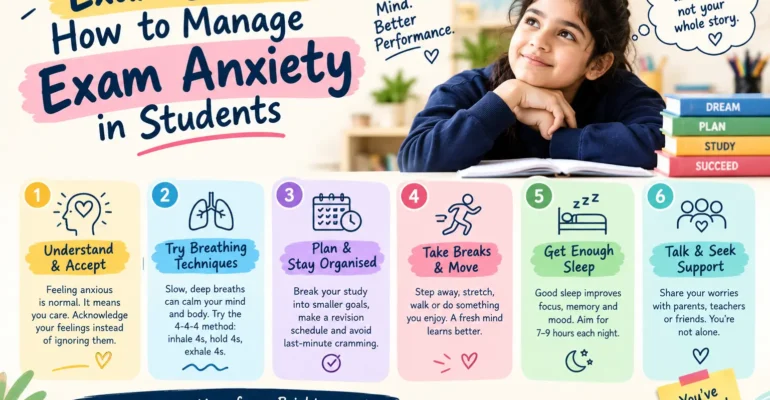
Exam Stress: How to Manage Exam Anxiety in Students
 Admin
Admin For most students, a little nervousness before an exam is normal — even useful. It sharpens focus and keeps you alert. But when exam stress builds up week after week, it can start to feel overwhelming: racing thoughts, sleepless nights, a mind that goes blank the moment you sit down to revise.
If you’re a student — or a parent watching your child struggle through exam season — this guide walks through what exam stress actually is, why it happens, and practical, evidence-based ways to manage it before, during, and after exams.
What Is Exam Stress, and Why Does It Happen?
Exam stress is the body’s natural response to pressure — a mix of physical, emotional, and mental strain triggered by the demands of preparing for and sitting exams. A certain amount of stress can be helpful, keeping you motivated and alert. Problems start when stress becomes constant and starts interfering with sleep, concentration, or daily life.
Common causes of exam stress include:
- Having too much material to revise in too little time
- Fear of disappointing parents, teachers, or yourself
- Comparing your progress to classmates
- Poor sleep and irregular study routines
- Not understanding course material, which builds anxiety over time
- Past experiences of doing poorly in exams
Recognising the specific cause of your stress is often the first step toward managing it — vague worry is harder to tackle than a clear, nameable problem.
Early Signs of Exam Anxiety to Watch For
Exam stress doesn’t always show up as obvious panic. In students, it often appears as:
- Persistent worry or racing thoughts
- Headaches, stomach aches, or muscle tension
- Trouble falling or staying asleep
- Irritability or mood swings
- Loss of appetite, or eating more than usual
- Losing interest in things they usually enjoy
- Avoiding revision altogether, or over-studying to the point of exhaustion
Parents and teachers are often better placed to notice these early signs than students themselves, which is why open, non-judgemental conversations matter during exam season.
Is Exam Anxiety a Real, Recognised Condition?
Yes — exam-related anxiety, sometimes called “exam phobia” or test anxiety, is a well-documented and common experience, not something to dismiss as students “overreacting.” For most students it’s situational: stress that builds around a specific exam period and eases once exams are over. For a smaller number, it can tip into a more persistent anxiety pattern that affects performance and wellbeing well beyond the exam hall. The key difference is whether the anxiety is proportionate to the situation and settles afterward, or whether it lingers, intensifies, or starts interfering with everyday functioning — at which point it’s worth speaking to a doctor or counsellor rather than trying to manage it alone.
How to Cope With Exam Stress: Practical Strategies
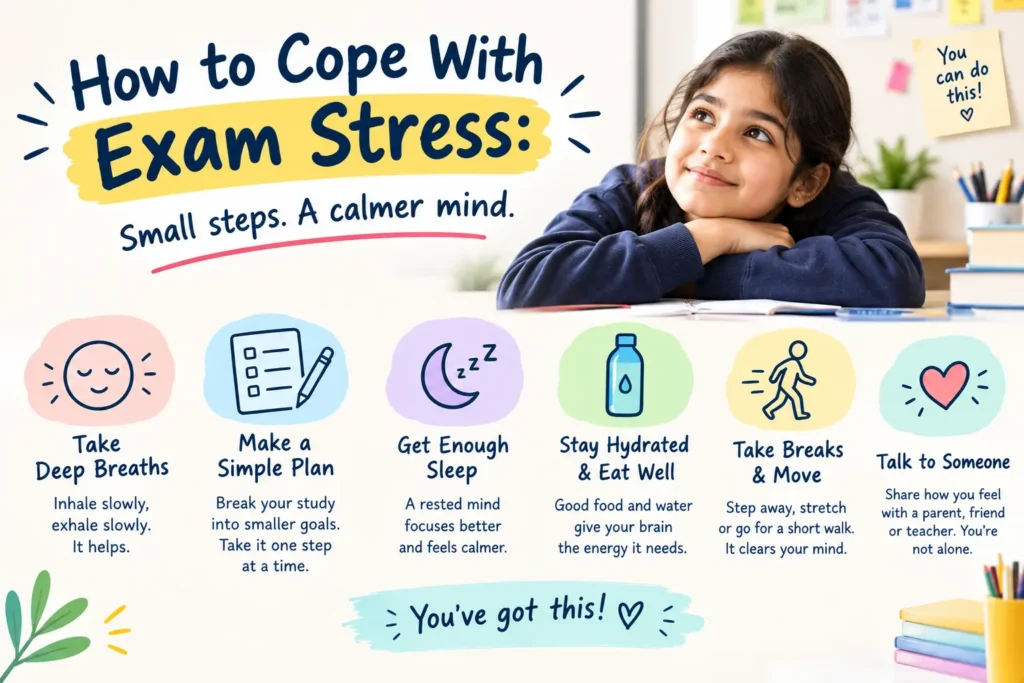
1. Build a Routine With Real Breaks
Structure reduces uncertainty, and uncertainty feeds stress. A consistent daily routine — even a loose one — gives your brain predictable checkpoints to rest. Regular breaks, exercise, and time away from books are not indulgences; they are part of effective studying, not a distraction from it.
2. Use Grounding Techniques When Anxiety Spikes
When anxious thoughts spiral, grounding techniques can interrupt the cycle by pulling your attention back to the present moment. One widely used method is the 3-3-3 rule: look around and name three things you can see, listen for three things you can hear, then move three parts of your body (or notice three things you can touch). This simple sensory reset activates your body’s calming response and can be used anywhere — in a classroom, exam hall, or before you even open a paper.
3. Limit Caffeine and Energy Drinks
A quick caffeine boost might feel helpful in the moment, but it can worsen sleep, increase heart rate, and heighten feelings of anxiety — the opposite of what you need before an exam.
4. Prioritise Sleep Over Late-Night Cramming
Cramming through the night rarely helps and often backfires. Sleep is when the brain consolidates memory, so a good night’s rest before an exam will do more for your recall than a few extra anxious hours of last-minute revision.
5. Talk About It
Bottling up exam stress tends to make it heavier. Talking to a parent, teacher, counsellor, or friend — even just naming what’s worrying you — can meaningfully lower stress levels. Support doesn’t need to be dramatic; sometimes it’s simply someone checking in.
6. Manage Expectations, Not Just Revision
A lot of exam stress comes from pressure — real or perceived — to meet a certain standard. It helps to put the exam in context: one paper, however important, does not define your entire future. Being honest with the people around you about what you’re feeling, and asking for support rather than carrying pressure silently, can ease a significant amount of that burden.
How to Manage a Panic Attack Before an Exam
If anxiety escalates into a panic attack — a sudden wave of intense fear with physical symptoms like a racing heart, shortness of breath, dizziness, or shaking — the goal is to ride it out safely rather than fight it:
- Slow your breathing. Try breathing in for 4 seconds, holding for 4, and exhaling for 6–8. Long, slow exhales calm the nervous system faster than short breaths.
- Ground yourself. Use the 3-3-3 technique above, or simply press your feet firmly into the floor and notice the sensation.
- Remind yourself it will pass. Panic attacks are frightening but time-limited — most peak within minutes and ease on their own.
- Step away if possible. If you’re at home or school before the exam starts, a few minutes in a quiet space can help you reset.
- Tell an invigilator or teacher if it happens during the exam. Exam centres are used to supporting students through this and can often give you a short pause.
Practising these techniques when you’re calm — not just when panic hits — makes them far easier to use in the moment.
Stress vs Anxiety: What’s the Difference?
The two are related but not identical. Stress is usually a response to an external, identifiable pressure — like an approaching exam — and tends to ease once that pressure is removed. Anxiety is a broader sense of worry or unease that can persist even without a clear, immediate trigger, and can continue after the stressful event has passed. In practice, exam stress that doesn’t let up even after exams end, or that shows up as constant worry unrelated to any specific paper, may be worth discussing with a professional rather than managing alone.
Building Healthy Habits, Not Just Coping Mechanisms
The number one habit that quietly worsens anxiety is avoidance — putting off revision because the anxiety around it feels too big, which then creates more panic as time runs out. Avoidance offers short-term relief but reliably makes anxiety worse over time. Breaking a task into small, specific steps and starting with just one of them is usually a more effective response than waiting to “feel ready.”
Other habits that genuinely help over time include consistent sleep, regular movement, realistic daily goals instead of all-or-nothing study sessions, and treating breaks as a scheduled part of the plan rather than something to feel guilty about.
How Panbai International School Supports Student Wellbeing
Academic pressure is real, but it shouldn’t come at the cost of a student’s mental health. At Panbai International School, exam stress is treated as something to actively manage, not something students are simply expected to push through alone. Teachers build realistic revision timelines well in advance of exam season so students aren’t facing a last-minute scramble, counsellors are available for students who want to talk through exam-related worry before it builds up, and mock exam cycles are used deliberately to make the real exam feel familiar rather than intimidating. The goal is a school environment where strong results and a healthy, supported student both matter — not one at the expense of the other.
Frequently Asked Questions
What is the 3-3-3 rule for stress?
It’s a grounding technique for calming anxiety in the moment: name three things you can see, three things you can hear, and move three parts of your body. It works by shifting attention away from anxious thoughts and back to the present moment.
How can I manage panic attacks before an exam?
Focus on slow, deep breathing (in for 4 seconds, out for 6–8), use a grounding technique like the 3-3-3 rule, remind yourself the feeling is temporary, and if needed, step away briefly or tell a teacher or invigilator — exam staff are generally prepared to support students through this.
How do I get rid of test anxiety?
Test anxiety rarely disappears overnight, but it can be significantly reduced through consistent practice under timed, exam-like conditions (so the format feels familiar), grounding and breathing techniques, adequate sleep, and talking openly about the worry rather than suppressing it. For persistent or severe test anxiety, a school counsellor or GP can offer more structured support.
How can I cope with exam stress?
Keep a steady routine with real breaks, limit caffeine, prioritise sleep over cramming, put the exam in perspective, and lean on support from parents, teachers, or friends rather than carrying the pressure alone.
What are the causes of exam stress?
Common causes include too much content and too little time, fear of letting others down, comparison with peers, poor sleep, gaps in understanding course material, and pressure from family or past exam experiences.
What is the difference between stress and anxiety?
Stress is typically a response to a specific, identifiable pressure and eases once that pressure passes. Anxiety is a more persistent sense of worry that can continue even without an immediate trigger, and may need professional support if it doesn’t ease over time.
A note on this topic: exam stress is common and usually manageable with the strategies above, but if worry, panic, or low mood is severe, doesn’t ease, or is affecting daily life, it’s worth speaking to a school counsellor, GP, or a mental health professional. In India, students and parents can also reach the government’s Tele MANAS helpline on 14416 (or 1-800-891-4416), available 24/7 in multiple languages, for confidential support.
For further reading, authoritative guidance is available from the NHS and Ireland’s HSE, both of which informed parts of this guide.
Students preparing for board exams may also find it useful to look into how a supportive academic structure makes a difference — for instance, exploring some of the best IGCSE schools in Mumbai that build exam preparation and student wellbeing into the same plan.